Nuclear regulator prepares to abandon decades-old radiation safety rule
A sign warning of radioactive materials is seen on a fence outside Indian Point Energy Center in Buchanan, N.Y. just days before it closed in 2021. The Trump administration is seeking to overhaul nuc…
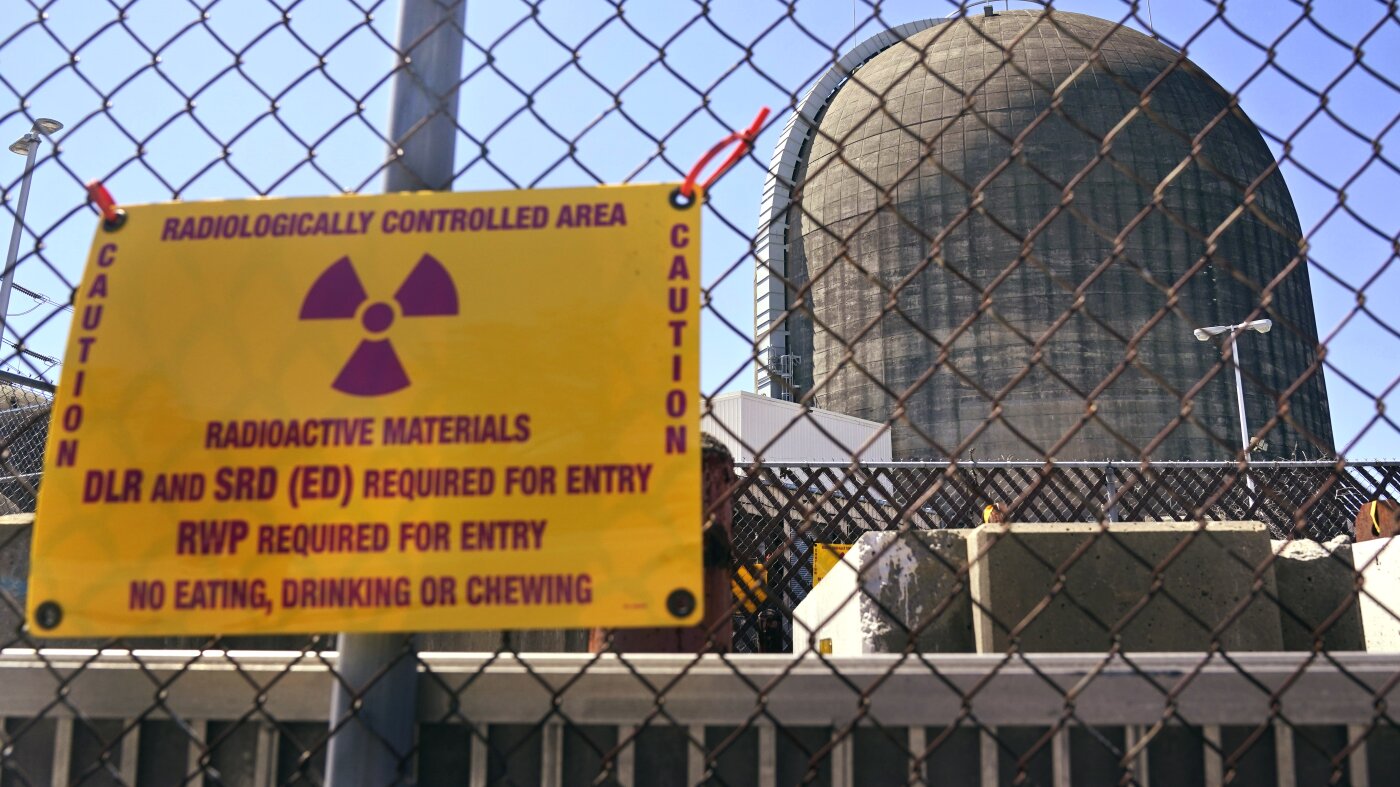
A sign warning of radioactive materials is seen on a fence outside Indian Point Energy Center in Buchanan, N.Y. just days before it closed in 2021. The Trump administration is seeking to overhaul nuclear safety rules to aid a nuclear revival. Seth Wenig/AP hide caption
The NRC is preparing to change a foundational rule designed to minimize radiation exposure. The update is part of President Trump's expansive changes to nuclear oversight, as his administration seeks to revive nuclear energy to power data centers for artificial intelligence.
Under a new proposed rule , the agency is eliminating a fifty-year-old standard known as "As Low As Reasonably Achievable" (ALARA), which requires the nuclear industry to drive radiation exposure for workers and the public below the stated limits where possible. The new rule also creates a carveout for some workers to get higher exposures to radiation in special circumstances.
For some, the elimination of ALARA is overdue. "Keeping doses as low as reasonably achievable was a fair idea," said Emily Caffrey, a radiation health physicist at the University of Alabama at Birmingham. But in practice the standard forced companies to take increasingly stringent radiation protection measures. It also created ambiguity, Caffrey said, "because what's 'reasonable' to one person isn't reasonable to another person."
But others warn that the change could lay the groundwork for higher radiation exposures.
"Removing it would remove that incentive for these companies to continue to maintain the practices that protected their workers and the public," said Edwin Lyman, director of nuclear power safety at the Union of Concerned Scientists, a watchdog group.
The public comment period for the new rule ends August 31. It could go into effect early next year.
Since shortly after the dawn of the nuclear age, scientists have been aware of the risks of radiation exposure, and decades of data makes it clear.
Read Full Story at NPR News →