AI proves Riemann hypothesis, raising concerns for mathematicians' intuition
An AI system has reportedly proven the Riemann hypothesis, a major mathematical conjecture that links prime number distribution to the Riemann zeta function. This development is bittersweet for mathe…
An artificial intelligence system has reportedly proven the Riemann hypothesis, a longstanding mathematical conjecture, sparking mixed emotions in the mathematical community. This proof, announced at a conference in Paris, was a momentous occasion, especially for mathematicians and enthusiasts who have dedicated their careers to understanding the distribution of prime numbers.
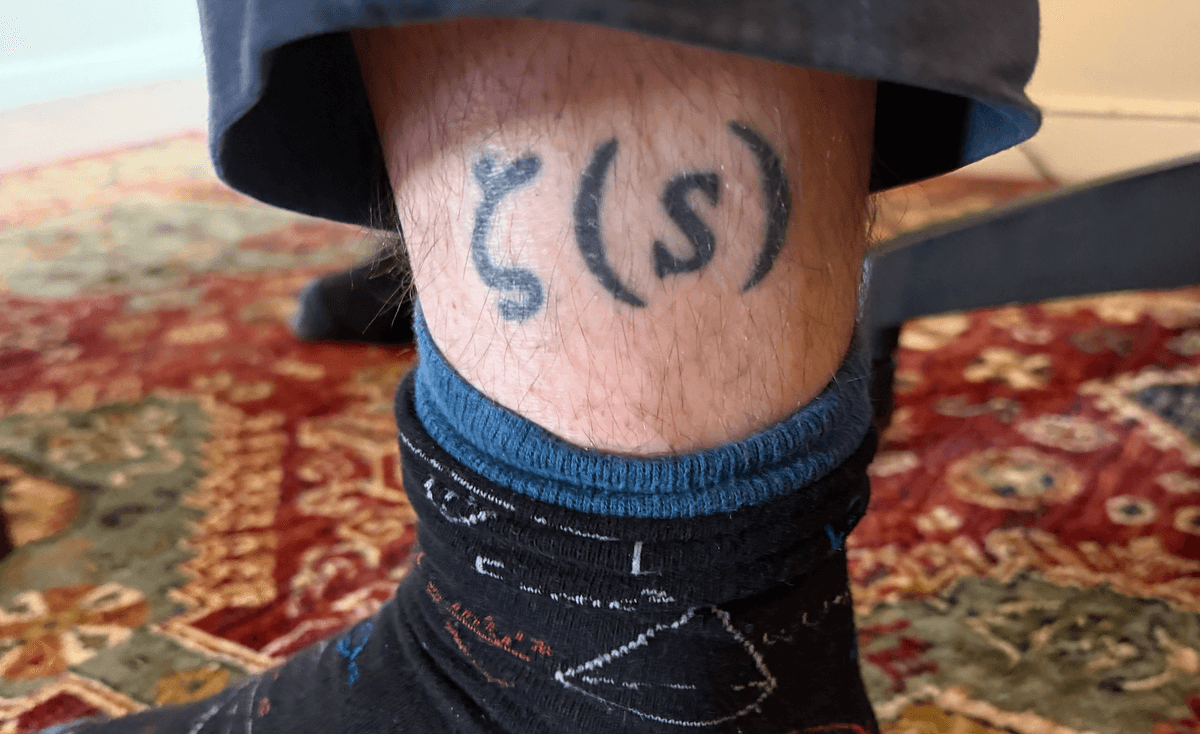
The Riemann hypothesis, formulated in 1859 by mathematician Bernhard Riemann, posits a deep connection between the distribution of prime numbers and the zeros of the Riemann zeta function. It remains one of the seven Millennium Prize Problems, with a reward of one million dollars for a correct proof. The announcement of the AI's proof comes at a time when the intersection of artificial intelligence and mathematics is increasingly relevant. As AI tools become more advanced, their ability to tackle complex problems is reshaping the landscape of research and inquiry.
While the news of the proof is undoubtedly groundbreaking, it raises questions about the role of AI in mathematics. Many mathematicians are concerned that reliance on AI could diminish the human aspect of mathematical discovery. The proof itself, despite being a significant milestone, is seen by some as bittersweet because it may overshadow the importance of human intuition and creativity in the mathematical process.
Moving forward, the mathematical community will need to scrutinize the AI-generated proof to verify its validity and implications. This scrutiny will likely involve extensive peer review and further exploration of the AI's methodology. The outcome could redefine the future of mathematical research and the relationship between human mathematicians and artificial intelligence. Understanding this relationship will be crucial as we navigate the evolving landscape of mathematics in the age of AI.
Read Full Story at Scientific American →