NASA reports Puncak Jaya ice reduced to scattered patches
NASA announced Monday that the ice near the summit of Indonesia’s Puncak Jaya has shrunk to scattered patches too small to flow like a glacier. The satellite analysis shows the remaining snowfield is…
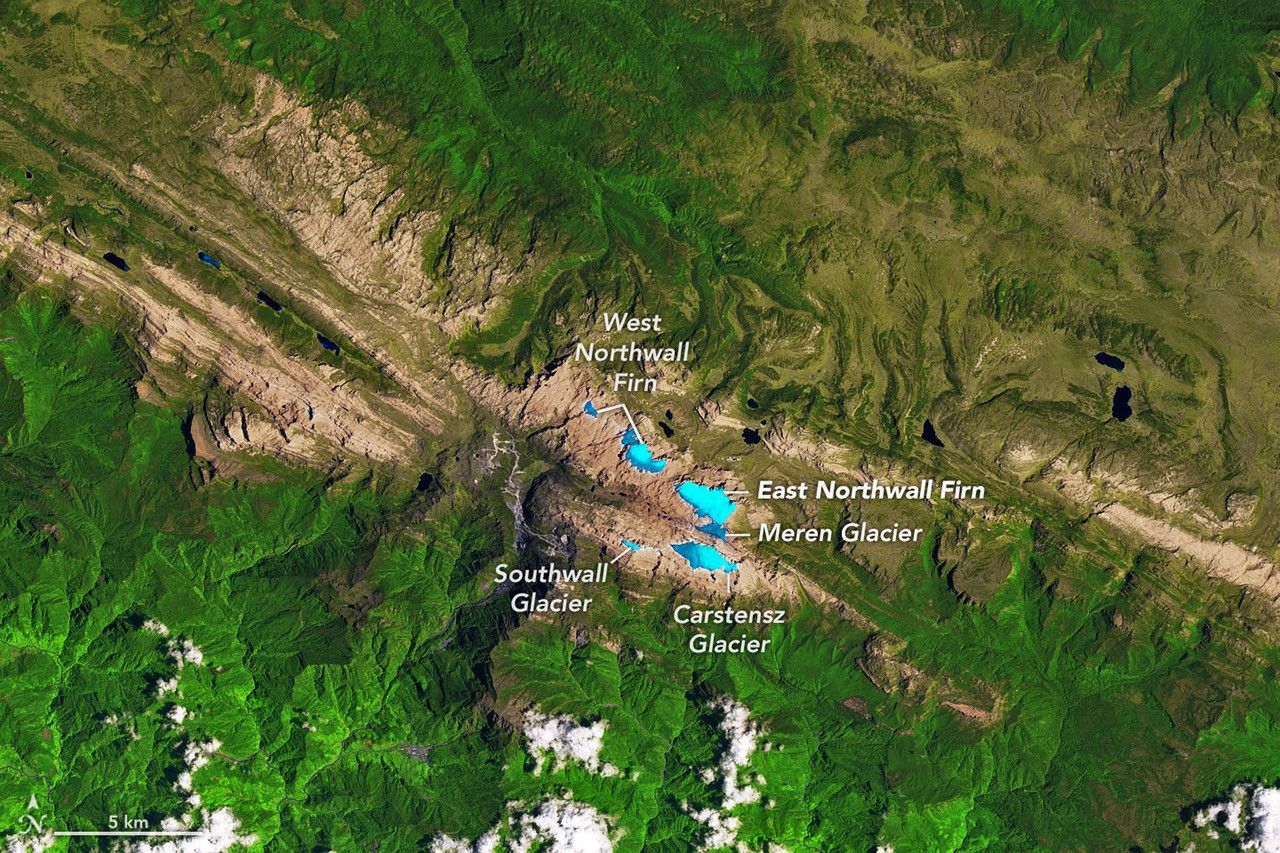
NASA announced Monday that the ice near the summit of Indonesia’s Puncak Jaya has shrunk to scattered patches too small to flow like a glacier. The satellite analysis shows the remaining snowfield is broken into isolated clumps, each a few hundred metres across. The change marks the end of the mountain’s last true glacier, which has existed for almost a century.
Puncak Jaya, also called Carstensz Pyramid, is the only place on the equator where a glacier has survived. Its ice has long been a barometer for global warming because it sits in a tropical climate that should not support permanent snow. Scientists have tracked the glacier since the 1970s, when it covered about 1.6 square kilometres. Over the past four decades the ice has been melting faster than any other high‑altitude glacier in the world, driven by rising temperatures and changing precipitation patterns.
NASA’s data shows the ice has lost more than 99 percent of its original area. In 2022 the remaining ice was just 0.02 square kilometres, broken into three tiny lobes that no longer move downhill. Dr Andrew Fountain, a glaciologist who has studied the site for 20 years, said the loss “is a stark reminder that even the most resilient ice is vulnerable to a warming planet.” Local officials in Papua province confirmed the patches are no longer a source of meltwater for downstream communities, and tourism operators warned that the iconic summit will lose one of its main attractions.
The remaining ice is expected to disappear completely within the next few years, according to climate models. Its loss will erase a unique natural laboratory for studying tropical glaciers and reduce fresh‑water supplies for nearby villages. Researchers plan to install automated weather stations to monitor the micro‑climate as the ice vanishes. The event adds urgency to global climate talks, underscoring how quickly warming can erase even the most remote and seemingly permanent features of the Earth.
Read Full Story at NASA →