European Court orders Turkey to release lawmaker Can Atalay, awards €32,500
The European Court of Human Rights has ordered Turkey to release jailed lawmaker Can Atalay and pay him €32,500, stating his detention aims to suppress political dissent. This ruling is crucial as it…
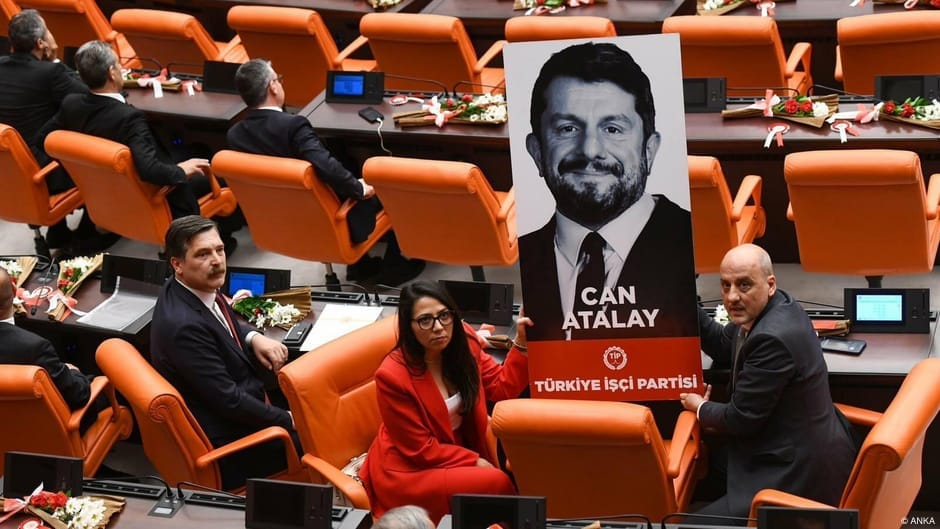
The European Court of Human Rights on Tuesday ordered Turkey to free Can Atalay, a human‑rights lawyer and elected member of parliament, and to pay him €32,500 in compensation. The court said his continued detention was intended to silence him and undermine political pluralism. Atalay must now be allowed to take his seat in the Turkish legislature.
Atalay was arrested after the 2013 Gezi protests, which the government later labelled an attempted coup. In April 2022 he and seven others were sentenced to 18 years for “aiding and abetting an attempted coup.” While held in the notorious Silivri prison he ran for the Workers’ Party of Turkey (TIP) in the 2023 elections, won a seat for the earthquake‑hit Hatay province, and has since seen his parliamentary status repeatedly challenged by Ankara. The Constitutional Court stripped his mandate in 2024, then reinstated it, but the ruling party blocked its reading in parliament, leaving him behind bars.
The ECHR judgment arrives after Turkey, a founding signatory of the European Convention on Human Rights, has ignored previous rulings in high‑profile cases such as those of activist Osman Kavala and Kurdish politician Selah Demirtaş. Judges stressed that Atalay’s case cannot be viewed in isolation; it is part of a broader pattern of detaining opposition figures, journalists and human‑rights defenders. TIP leader Erkan Bas immediately posted on social media, demanding Atalay’s release and the restoration of his parliamentary mandate.
If Ankara complies, Atalay could become the first opposition MP freed after an ECHR order in years, a test of Turkey’s commitment to European human‑rights standards. Failure to act could deepen the country’s isolation from the Council of Europe and fuel criticism from Western governments. The ruling also raises questions about the future of political pluralism in a nation where the ruling party has repeatedly used the courts to sideline dissent.
Read Full Story at DW World →