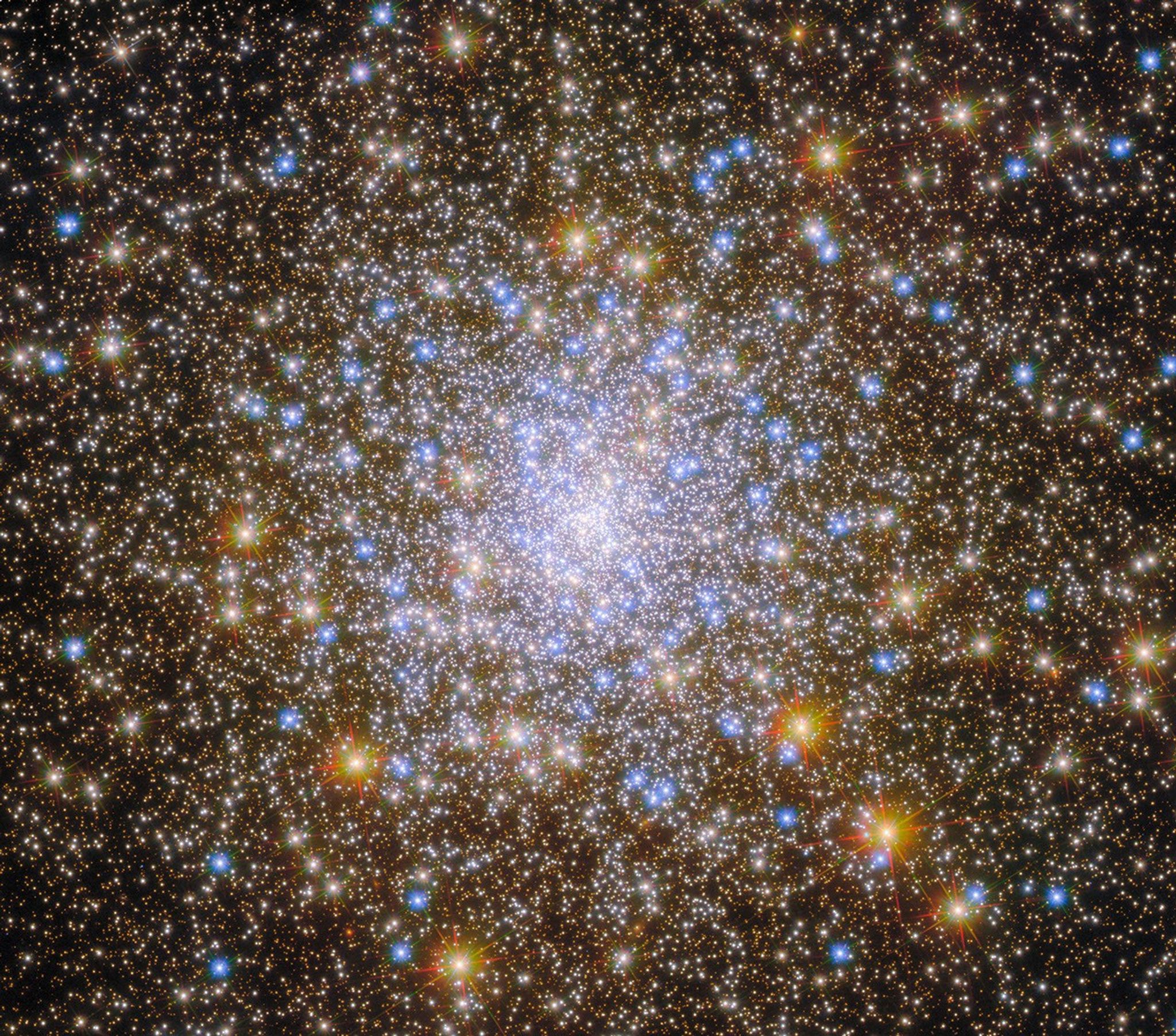
Astronomers discover potential supermassive neutron star 9,000 light-years away
Astronomers have identified a potentially rare supermassive neutron star about 9,000 light-years away, detected by its gravitational influence on nearby stars. If confirmed, this discovery could sign…
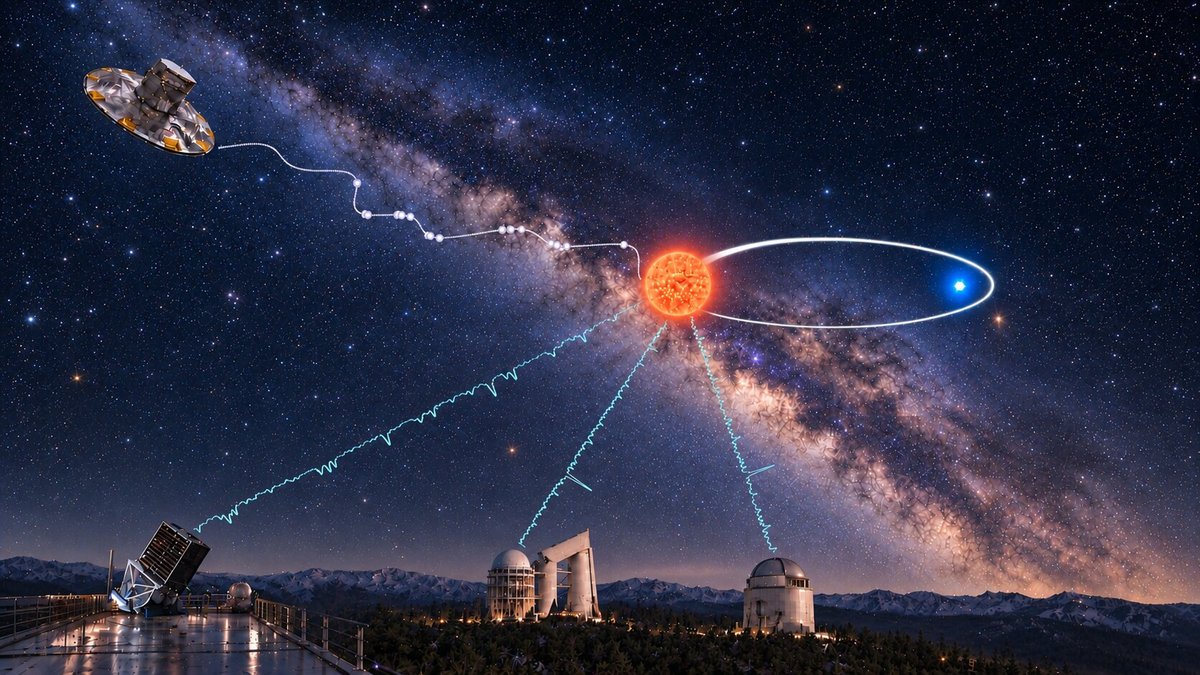
Astronomers announced Tuesday that a previously unseen object, detected through its gravitational influence on nearby stars, may be a rare super‑massive neutron star. The object, located about 9,000 light‑years from Earth in the constellation Cygnus, was first flagged by the European Space Agency’s Gaia mission, which maps the positions of billions of stars with unprecedented precision. Its mass, estimated at roughly three times that of the Sun, is far too high for a typical neutron star but too low to be a black hole, prompting researchers to label it a “super‑massive neutron star” – a class that has never been observed directly.
The discovery comes as a result of new data‑analysis techniques that sift through Gaia’s massive catalog for subtle wobbles in stellar motions. Over the past year, a team led by Dr. Elena Martínez of the Institute for Astrophysics in Madrid applied these methods to a swath of the Milky Way’s disk, looking for objects that betray themselves only by tugging on visible stars. The invisible mass they uncovered caused a measurable acceleration in a pair of bright stars, allowing the team to calculate its gravitational pull. Follow‑up observations with the Very Large Array and the Chandra X‑ray Observatory found no electromagnetic emission, reinforcing the idea that the object is essentially dark.
Scientists say confirming a super‑massive neutron star would reshape theories of how matter behaves at extreme densities. If the object is indeed a neutron star with a mass near the theoretical limit, it would challenge current models of nuclear physics and the equation of state that describes neutron‑star interiors. The team plans to monitor the system for additional gravitational effects and to search for faint radio pulses that could reveal a hidden pulsar. Future missions such as the Laser Interferometer Space Antenna could also detect the subtle ripples in spacetime the object may generate, offering another way to verify its nature. The find underscores how modern surveys can uncover exotic objects that were invisible to traditional telescopes, opening a new window on the most extreme states of matter in the universe.
Read Full Story at Scientific American →