NASA’s Voyager 2 survives daring ‘big bang’ maneuver
NASA’s Voyager 2 survives daring ‘big bang’ maneuver After 49 years in space, NASA’s Voyagers are running low on power—but an audacious move should extend the tenures of the two spacecraft “Big ban…
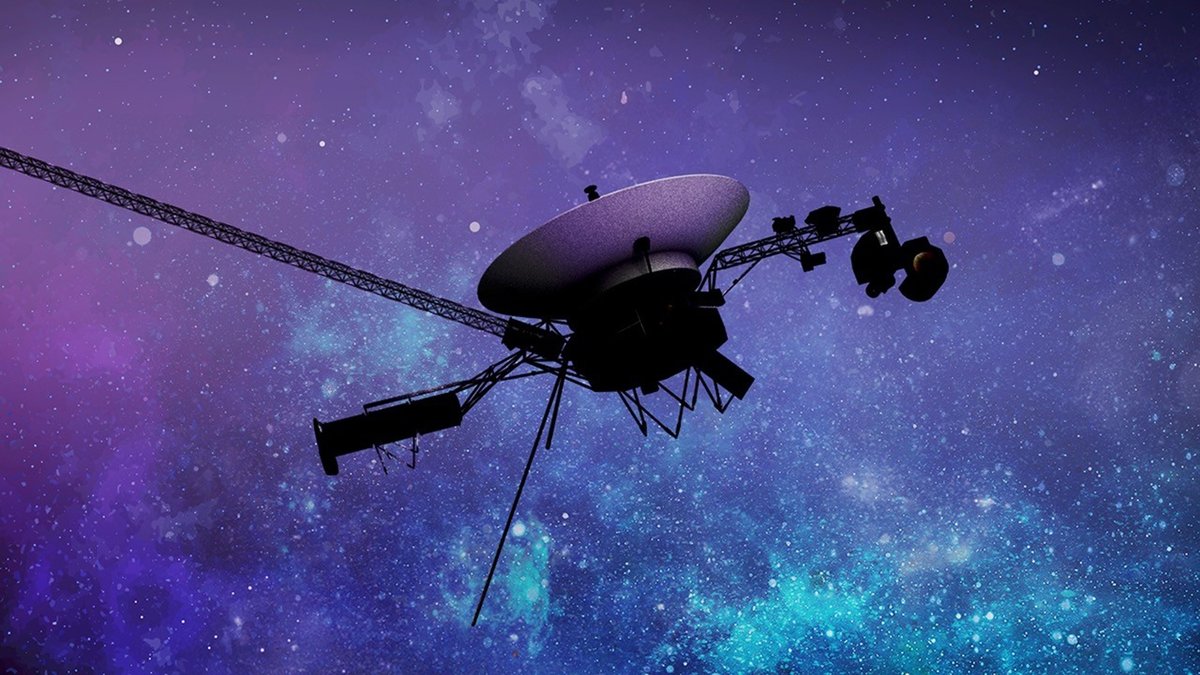
After 49 years in space, NASA’s Voyagers are running low on power—but an audacious move should extend the tenures of the two spacecraft
“Big bang” is not a phrase NASA typically wants for describing any of its space missions, let alone its beloved twin Voyager interstellar probes. But engineers have successfully performed a delicate procedure with just that nickname on Voyager 2—a process they believe could extend the spacecraft’s operations by two years. And Voyager 1 is up next.
“This is the most important thing we’ve done on the Voyager spacecraft in decades,” says Kareem Badaruddin, Voyager mission manager and a systems engineer at NASA’s Jet Propulsion Laboratory in California.
The audacious effort was designed to address the Voyagers’ constant dilemma—how to keep the probes running on an ever shrinking trickle of power. Each spacecraft carries a plutonium-based nuclear power source that provides electricity and heat through radioactive decay. But as the plutonium progressively decays, it also produces less energy, so each spacecraft is losing about four watts of power generation annually.
If you're enjoying this article, consider supporting our award-winning journalism by subscribing . By purchasing a subscription you are helping to ensure the future of impactful stories about the discoveries and ideas shaping our world today.
Over the years, this has forced NASA to slowly turn off science instruments. Yet the plutonium decay and the spacecraft operations it powers also produce the heat that keeps each Voyager operational: if the fuel lines feeding one of these spacecraft’s thrusters were to freeze, the probe would fall silent, and its storied mission would come to an end.
The Voyagers have been skirting this dismal fate for years now, with NASA engineers carefully monitoring each spacecraft’s power supplies and plotting out when to turn off individual instruments to keep the missions going as long as possible . But the situation had become critical, demanding an urgent remedy.
The Voyagers have long been in an unusual position for NASA spacecraft. Both launched in 1977, with Voyager 2 blasting off about three weeks before its twin, although Voyager 1 followed a different trajectory to catch up and surpass it. Voyager 1 zipped past Jupiter in 1979 and, in 1980, flew by Saturn and its largest moon, Titan. Voyager 2 conducted a “grand tour” of the outer solar system that took it past Jupiter and Saturn and then executed humanity’s only flybys to date of Uranus and Neptune in the late 1980s.
Read Full Story at Scientific American →