NASA launches Nancy Grace Roman Space Telescope
NASA’s Nancy Grace Roman Space Telescope launched on August 30, 2026, to study dark energy and find exoplanets with a 100x wider view than Hubble. Its $3.9B mission aims to map billions of galaxies a…
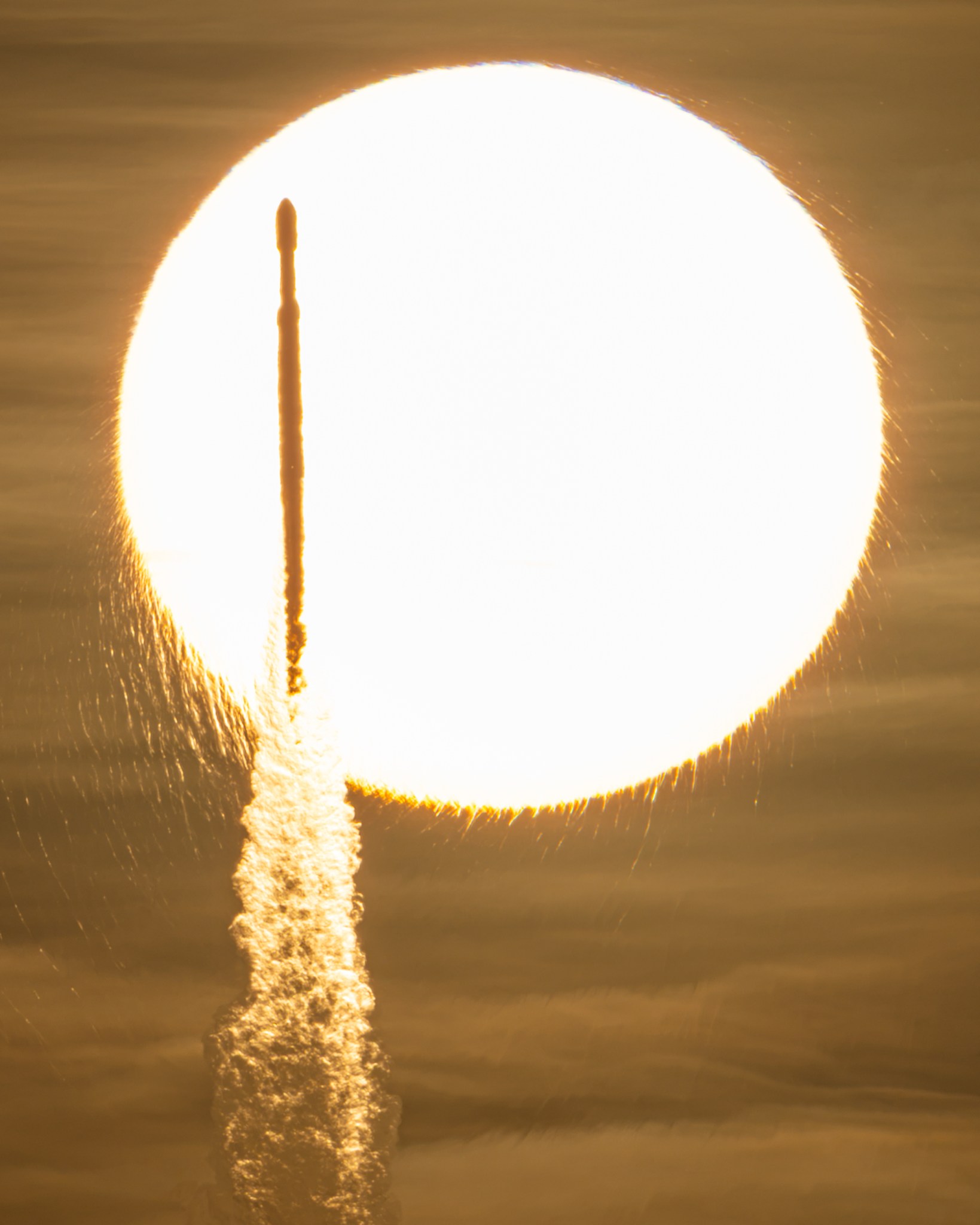
NASA’s Nancy Grace Roman Space Telescope launched from Kennedy Space Center in Florida on August 30, 2026, aboard a SpaceX Falcon Heavy rocket. The telescope, named after NASA’s first chief astronomer, will spend its first six months in orbit testing and calibrating its instruments before beginning a five-year survey of the cosmos.
Roman is designed to map billions of stars and galaxies with a field of view 100 times wider than the Hubble Space Telescope. Its primary mission is to study dark energy, the mysterious force accelerating the universe’s expansion, and to search for exoplanets using gravitational microlensing. The telescope carries a 2.4-meter mirror—similar in size to Hubble’s—but with a much wider field of view, allowing it to capture large swaths of the sky in a single image. Funding and development began over a decade ago, with NASA investing $3.9 billion in the project to build on discoveries from missions like Hubble and the James Webb Space Telescope.
Engineers confirmed the telescope successfully reached its destination, a stable orbit around the second Lagrange point (L2), about a million miles from Earth. Over the next six months, teams at NASA’s Goddard Space Flight Center will fine-tune Roman’s instruments, including its Wide Field Instrument and Coronagraph, which will block starlight to directly image exoplanets. The telescope’s data will be publicly available, accelerating research in astrophysics and cosmology. Early estimates suggest Roman could discover thousands of new exoplanets, including Earth-like worlds in habitable zones.
Once operational, Roman will work alongside other observatories like Webb and the Vera C. Rubin Observatory to rewrite our understanding of the universe. Its wide-field surveys will help scientists study galaxy formation, dark matter, and the evolution of cosmic structures. The mission’s success could redefine astronomy in the 2030s, offering new insights into how the universe began and where it’s headed.
Read Full Story at NASA →