Medicaid work rule leaves homeless people in the cold
Izzy Kadrmas, a medical assistant at Partnership Health Center's Watershed Clinic in Missoula, Montana, prepares to take Tywon Pugh's blood for testing. Katheryn Houghton/KFF Health News hide caption…
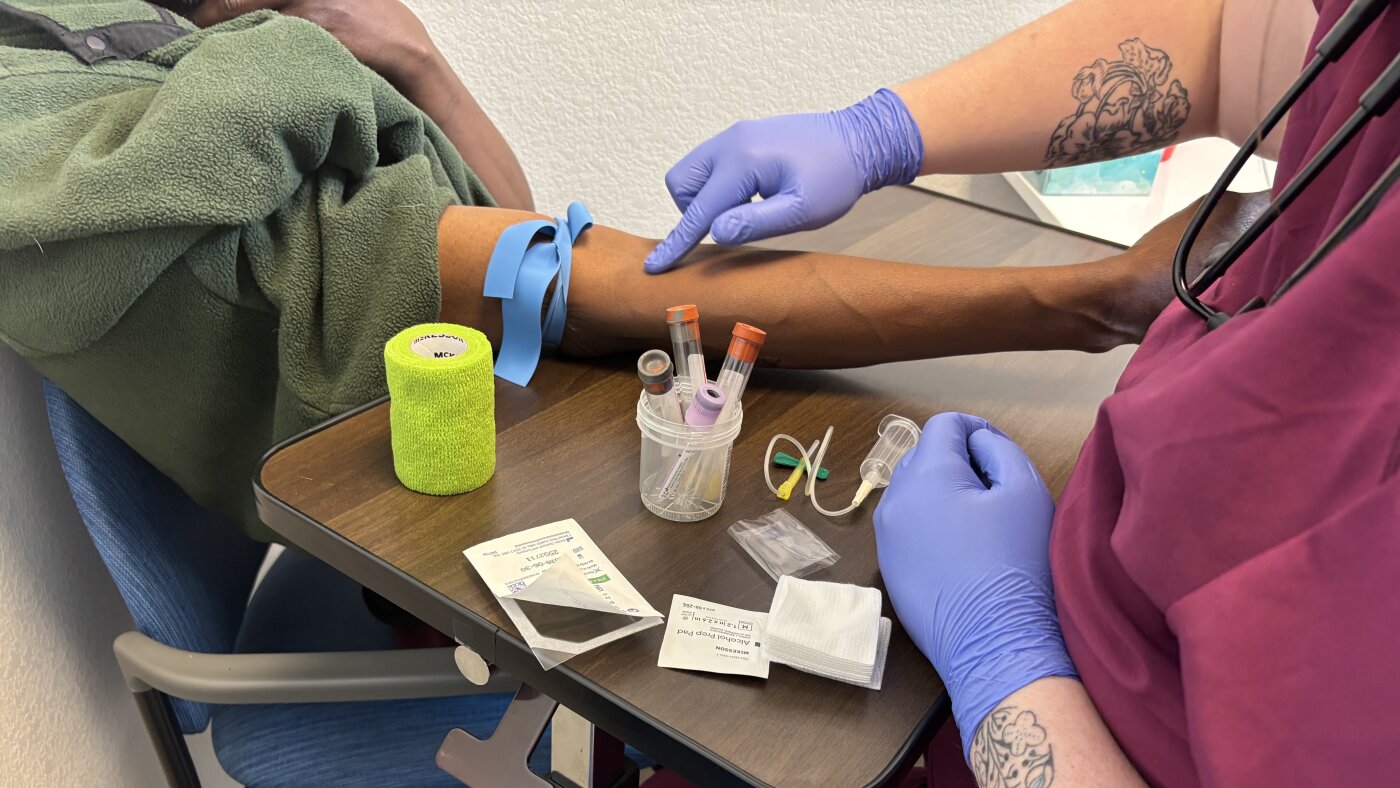
Izzy Kadrmas, a medical assistant at Partnership Health Center's Watershed Clinic in Missoula, Montana, prepares to take Tywon Pugh's blood for testing. Katheryn Houghton/KFF Health News hide caption
MISSOULA, Mont. — Tywon Pugh has seizures that make it hard to find and keep a job.
"They called me a 'liability to the job site,'" Pugh said, recalling the words of his manager when a seizure cost him his last job at a fast-food restaurant in this western Montana city.
When the 46-year-old lost work in the past, his wife of 10 years covered their rent and he tended to their home until he found another job. But his wife died last year. Soon after, Pugh became homeless. His problem with alcohol became worse, which made managing his seizures more difficult.
For the latest stories on the science of healthy living, subscribe to NPR's Health newsletter .
Medicaid pays for the prescriptions that keep Pugh's seizures at bay. The government-subsidized health coverage would also pay for an addiction treatment program that Pugh says he has tried to get into, but he was told there's a waitlist.
Pugh's goal has been to get healthy enough to work again. But he's worried about being able to keep the Medicaid coverage he needs to get to that point.
In the spring, the federal government finalized regulations requiring millions of people who receive Medicaid benefits to prove they're working, volunteering, or going to school to keep their coverage. States have until January to begin those checks. Montana, Arkansas, and Nebraska have already started implementing them.
Read Full Story at NPR Health →