Anwar Ibrahim navigates Malaysia's foreign policy amid US-China tensions
Malaysian Prime Minister Anwar Ibrahim is committed to a balanced foreign policy amidst rising tensions between the U.S. and China, but his pro-China remarks regarding Taiwan have raised concerns abo…
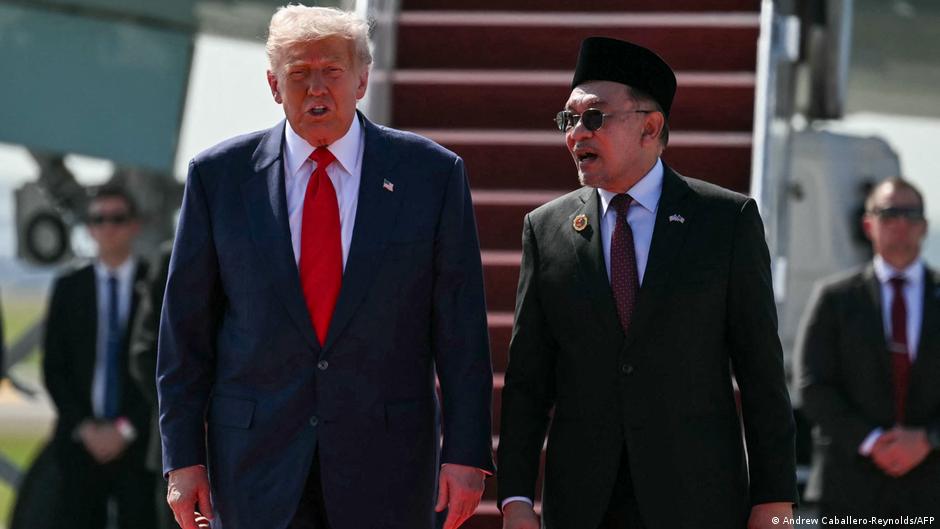
Malaysian Prime Minister Anwar Ibrahim has reiterated his commitment to a balanced foreign policy, asserting that Malaysia will not be forced to choose between the United States and China. However, recent remarks have sparked debate about the sustainability of this position amid growing tensions between the two superpowers in Southeast Asia.
Anwar's comments came during an interview with Al Jazeera, where he stated, "I see Taiwan as part of China, period." This aligns with Beijing's stance on Taiwan, which it considers a breakaway province. Anwar further stirred controversy by suggesting that if a province were to secede, force could be justified to maintain national unity. These statements were met with approval from Beijing, while Taiwan's Foreign Ministry criticized him for legitimizing potential aggression against the island. They warned that his pro-China stance could deter Taiwanese investments in Malaysia, particularly in the crucial semiconductor sector.
Just days after the Taiwan remarks, Anwar emphasized the need for Malaysia to bolster its defenses in the state of Sabah. This call for increased security comes in response to the expansion of U.S. military facilities on the Philippine island of Balabac, located just 31 miles from Malaysia. The Philippines has recently enhanced its military cooperation with the U.S., which includes allowing American forces access to additional bases. Anwar’s comments indicate a growing unease about the U.S. military presence in the region, suggesting a shift in Malaysia's perception of its traditional ally.
Despite these developments, experts caution against viewing Anwar's rhetoric as a definitive pivot toward China. Ngeow Chow Bing, director of the Institute of China Studies at Universiti Malaya, noted that Malaysia continues to maintain strong ties with the U.S. and other Western nations, albeit those relationships may not receive as much public attention. The challenge for Anwar will be navigating these complex international dynamics while ensuring Malaysia's interests remain safeguarded. As the geopolitical landscape evolves, Malaysia's ability to maintain its middle path could be put to the test.
Read Full Story at DW World →