El Salvador's CECOT prison holds 15,000 inmates as crime model debated
El Salvador's Terrorism Confinement Center (CECOT), housing 15,000 inmates, is being considered as a model for addressing organized crime in Latin America, amidst rising violence. However, experts wa…
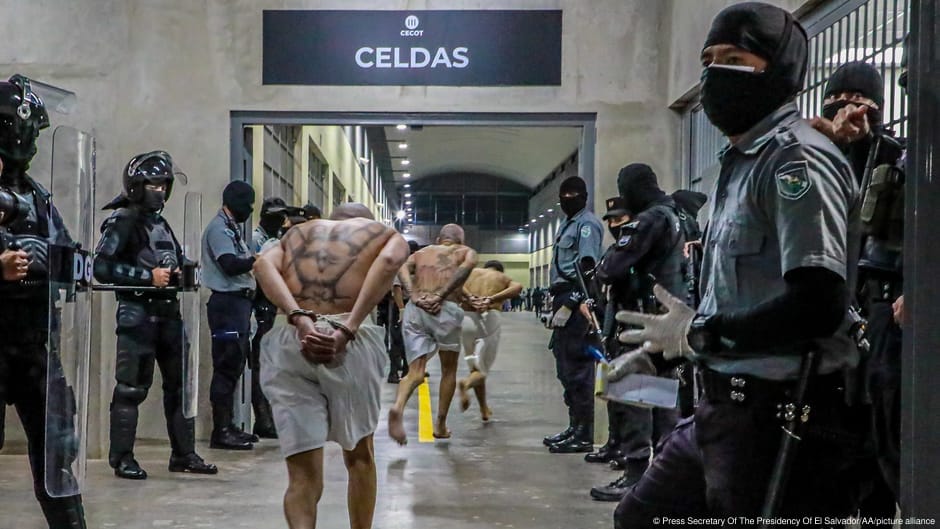
El Salvador's Terrorism Confinement Center (CECOT) has become a focal point in the debate over prison reform in Latin America, housing around 15,000 inmates despite having a capacity of 40,000. This facility, which is emblematic of President Nayib Bukele's aggressive security policies, has drawn attention as a potential model for other countries in the region grappling with organized crime. Staged images of inmates, often depicted with shaved heads and tattoos under the watchful eyes of heavily armed guards, have raised concerns about the human rights implications of such extreme security measures.
The urgency of this discussion stems from a rising tide of violence and insecurity in Latin America, prompting over a dozen governments to consider the establishment of similar "mega-prisons." However, experts are skeptical about the viability and effectiveness of these large-scale facilities. Criminologist Jose Luis Perez Guadalupe points out that overcrowded prisons have long existed in the region, exemplified by Lima’s Lurigancho Prison, which was built for 3,000 inmates but has housed nearly 11,000 for years. While CECOT has redefined the term "mega-prison" to refer to high-security environments, this approach has been criticized for suggesting that all inmates require harsh punishment.
Olga Espinoza, an academic specializing in prison systems, argues that placing diverse inmate populations in maximum-security settings can lead to increased criminal behavior rather than rehabilitation. She warns that these facilities demand extensive investments in infrastructure, staff, and anti-corruption measures, which may not yield the intended results. Additionally, the history of criminal organizations forming within overcrowded prisons, such as Tren de Aragua in Venezuela and Primeiro Comando da Capital in Brazil, underscores the risks involved in such a one-size-fits-all strategy.
Despite the appeal of constructing a single, large facility to address overcrowding and infrastructural challenges, experts like Renato Rivera argue that there is little evidence to support the cost-effectiveness of mega-prisons. The United Nations has long recommended medium-sized prisons that accommodate between 1,000 and 2,000 inmates, emphasizing a more balanced and rehabilitative approach to incarceration. As Latin American countries contemplate the future of their prison systems, the lessons from El Salvador's CECOT may serve as a cautionary tale rather than a blueprint for reform.
Read Full Story at DW World →