Germany, Kosovo unite against ticks carrying deadly virus
It can spot its prey from up to 200 meters (about 650 feet) away — but unlike many of its fellow species, it doesn't lurk in the grass waiting for its victim to come closer. Instead it runs after it,…
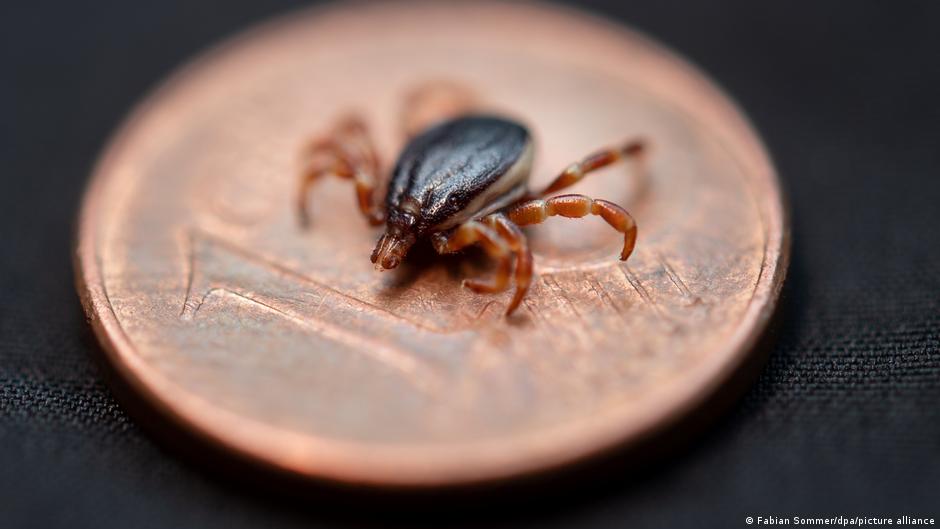
It can spot its prey from up to 200 meters (about 650 feet) away — but unlike many of its fellow species, it doesn't lurk in the grass waiting for its victim to come closer. Instead it runs after it, chasing animals and humans alike.
The Hyalomma tick, often called "the great hunting tick," was previously found mostly in Africa, Asia, and southern Europe. But climate change means it can now survive further north and it has already been spotted in Germany and various Eastern European countries. Kosovo, in southeastern Europe, has been a hot spot for the tick for some time now.
The Hyalomma tick is also a vector of the highly pathogenic virus for Crimean-Congo hemorrhagic fever, a potentially deadly disease with a high fatality rate. Symptoms of the disease are comparable to those of Ebola fever or the Marburg virus . These are capable of destroying blood and lymphatic vessels, which can lead to internal bleeding and death.
To view this video please enable JavaScript, and consider upgrading to a web browser that supports HTML5 video
Kurtesh Sherifi first read about Crimean-Congo hemorrhagic fever in the newspaper in 2005, when he was completing his studies as a veterinarian in Berlin. The article said that 11 people in his homeland, Kosovo, had contracted the disease and five had died. He was already interested in pathogens that can be transmitted between animals and humans, known as zoonoses, and Crimean-Congo fever intrigued him.
Back home, Sherifi started work with the faculty of agriculture and veterinary medicine at the University of Pristina. But the budget for research was tight. Kosovo, a small country with only about 1.6 million citizens, didn't have a high-security laboratory or the equipment necessary for investigating the Crimean-Congo fever virus.
Sherifi got in touch with Germany's largest institution for study in this area, the Bernhard Nocht Institute for Tropical Medicine in Hamburg.
One of the researchers was Petra Emmerich, a virologist and expert on what are known as Risk Group 4 viruses — viruses that cause severe, often fatal, diseases and usually have no widely available treatment. The Crimean-Congo virus is in that risk group.
Read Full Story at DW World →