'Extreme' transistor can withstand heat of 1000-plus F — priming it for use in Venus-bound probes
Scientists in Japan have built a new transistor that can withstand temperatures of 1,110 degrees Fahrenheit (600 degrees Celsius). Components this robust could one day be used in surface probes on Ve…
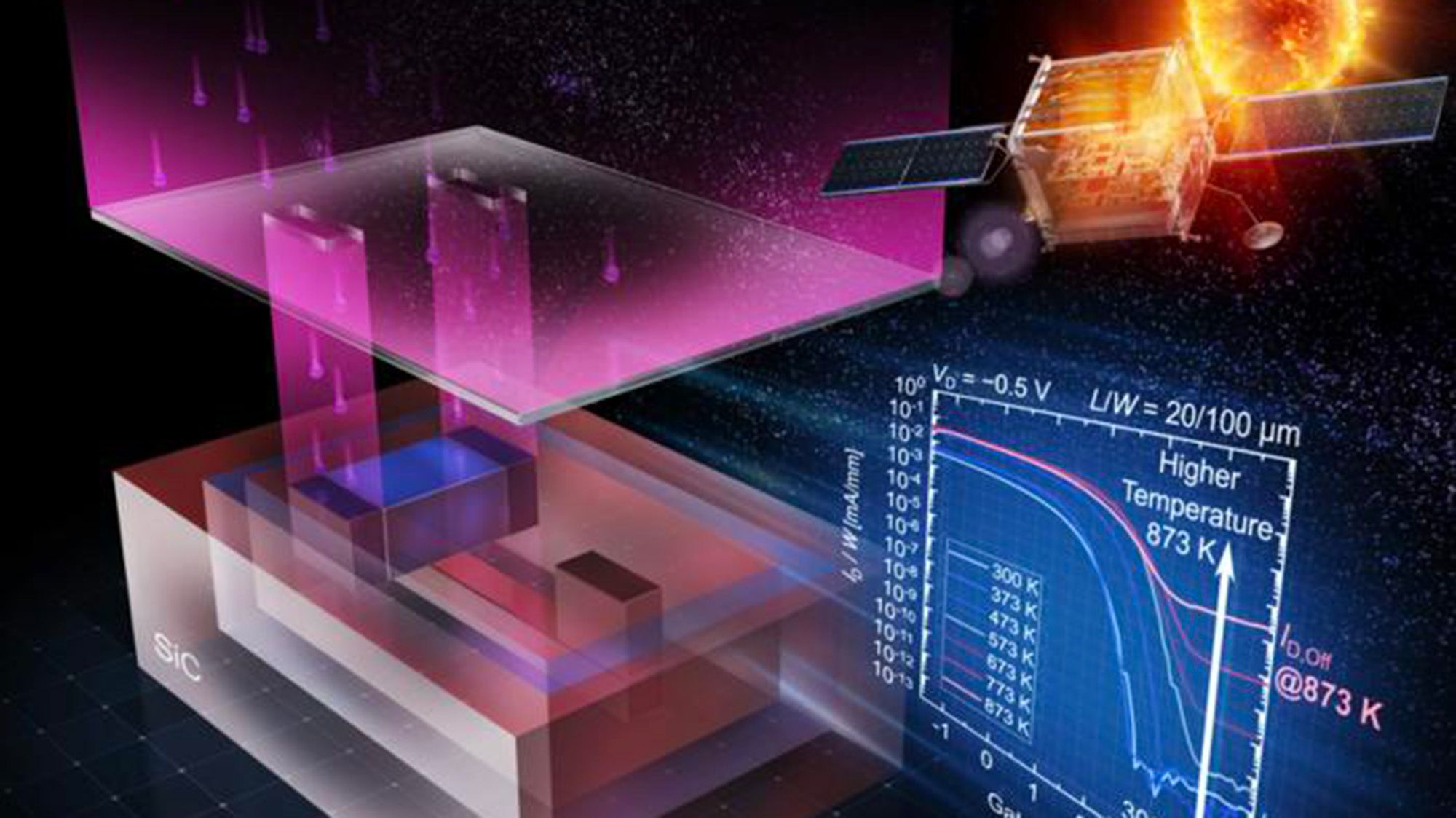
Scientists in Japan have built a new transistor that can withstand temperatures of 1,110 degrees Fahrenheit (600 degrees Celsius). Components this robust could one day be used in surface probes on Venus — where the thick carbon dioxide atmosphere can reach temperatures of 860 F (460 C).
Most modern tech, including instruments used for deep-space exploration, uses transistors to control the flow of current. But the new device is a type of junction field-effect transistor (JFET), where the strength of an electrical field changes the channel’s conductivity.
JFETs are typically used in specialist applications because they are more difficult to scale down than the more common metal-oxide-semiconductor field-effect transistors (MOSFETs), which are widely used in consumer smartphones and computers. But JFETs can offer lower noise levels because their operation does not rely on an oxide layer, which can introduce interference.
The researchers outlined how the new transistor works in a study published Aug. 17 in the journal APL Electronic Devices .
Since at least the start of the century , silicon carbide (SiC) JFETs have been considered a promising option for low-power integrated circuits heading for Venus due to the material's inherent ability to withstand high temperatures.
As the scientists pointed out in the new study: "Past landers have been limited to only a few hours by silicon-based electronics." Venera 13, a Soviet-era lander, holds the world record for the longest time survived on Venus by a spacecraft, at 2 hours, 7 minutes.
"Integrated circuits (ICs) fabricated with SiC are particularly attractive for extreme environments, such as deep-space exploration, geothermal drilling, and aerospace engine control, where conventional silicon-based ICs cannot operate reliably," the researchers added.
Get the world’s most fascinating discoveries delivered straight to your inbox.
Read Full Story at Live Science →