Cheap wall tiles 'inspired by flowing streams' could fix one of superfast 6G's biggest problems
Future 6G networks promise blistering speeds , but there's a catch. The wireless channels they'll rely on can't pass through walls. But now, engineers have designed a workaround that could help solve…
Future 6G networks promise blistering speeds , but there's a catch. The wireless channels they'll rely on can't pass through walls. But now, engineers have designed a workaround that could help solve one of the technology's biggest obstacles.
The next generation of cellular network technology is expected to lean heavily on millimeter waves — a sliver of the electromagnetic spectrum that can carry huge amounts of data but with wavelengths so short that they struggle to pass through solid objects like walls and furniture.
That's very different from the lower-frequency signals used by Wi-Fi and older cellular networks like 5G and 4G, which travel through obstacles far more easily. The result is patchy indoor coverage — a major roadblock for any technology that depends on millimeter waves.
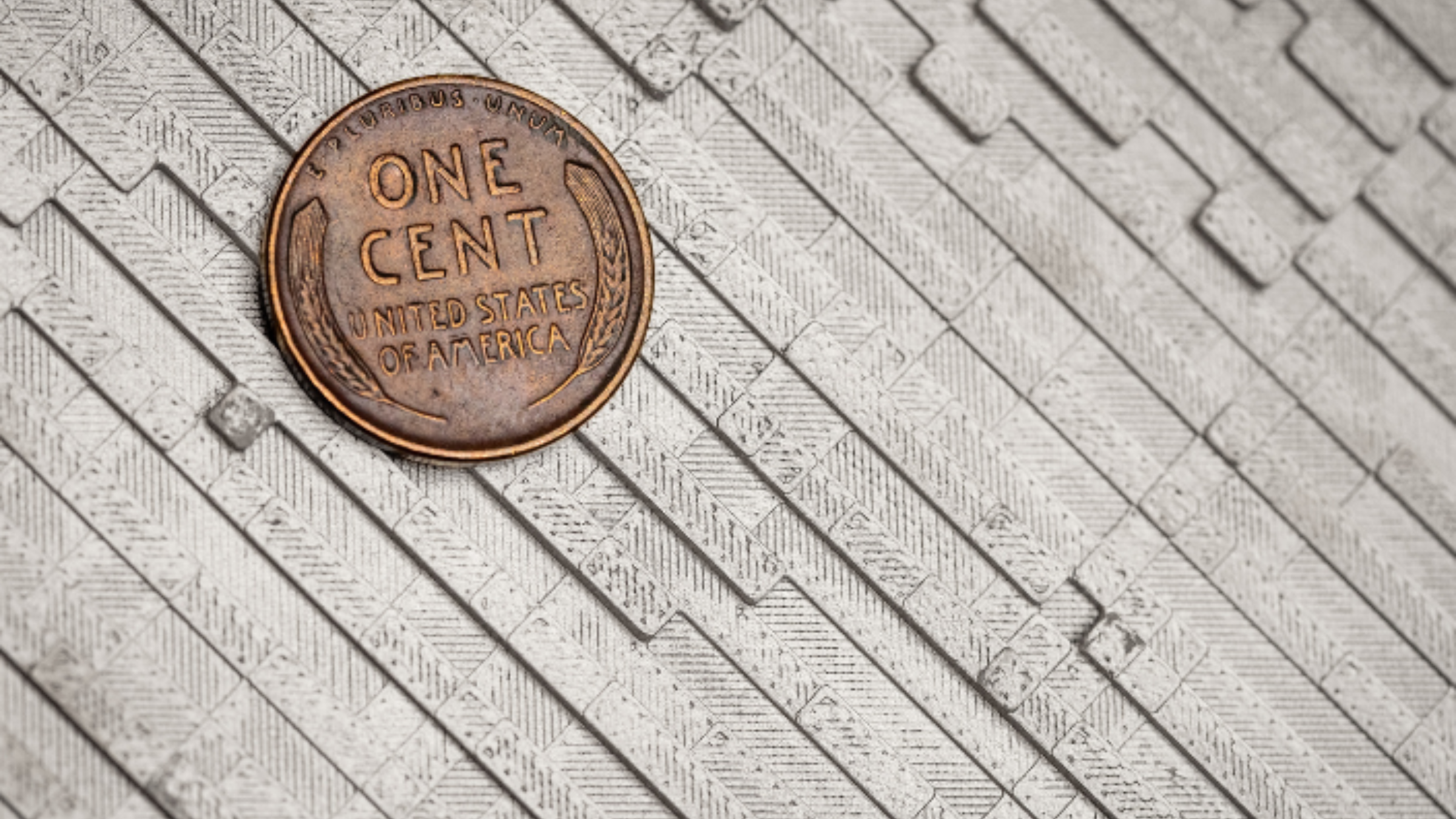
But engineers think they've found an inexpensive workaround in the form of thin, 3D-printed tiles that reflect millimeter-wave signals around obstacles instead of trying to punch through them. The researchers outlined their technology, dubbed "FlowForm," in a new study published Aug. 11 in the journal Association for Computing Machinery . They also presented these findings Aug. 19 at the ACM SIGCOMM 2026 conference in Denver.
6G, which is expected to be rolled out in the 2030s, promises a theoretical maximum data-transfer speed of up to 1 terabit per second — approximately 3,000 times faster than average 5G speeds. But before the technology can be introduced, problems like its wireless signals being blocked by physical barriers must be resolved.
Each 6-by-6-inch (15 by 15 centimeters) tile is packed with thousands of engineered features smaller than the wavelengths themselves. These elements passively redirect incoming signals in specific directions.
Once they're created and mounted onto surfaces, the tiles require no power source, no wiring and no software updates. They just need to be fixed to a wall or ceiling.
Get the world’s most fascinating discoveries delivered straight to your inbox.
Read Full Story at Live Science →