Leon Wankum calls Bitcoin digital real estate for investors' stability
Leon Wankum argues Bitcoin is digital real estate, emphasizing scarcity and ownership over currency status. This framework provides a stable mental model for investors navigating regulatory and class…
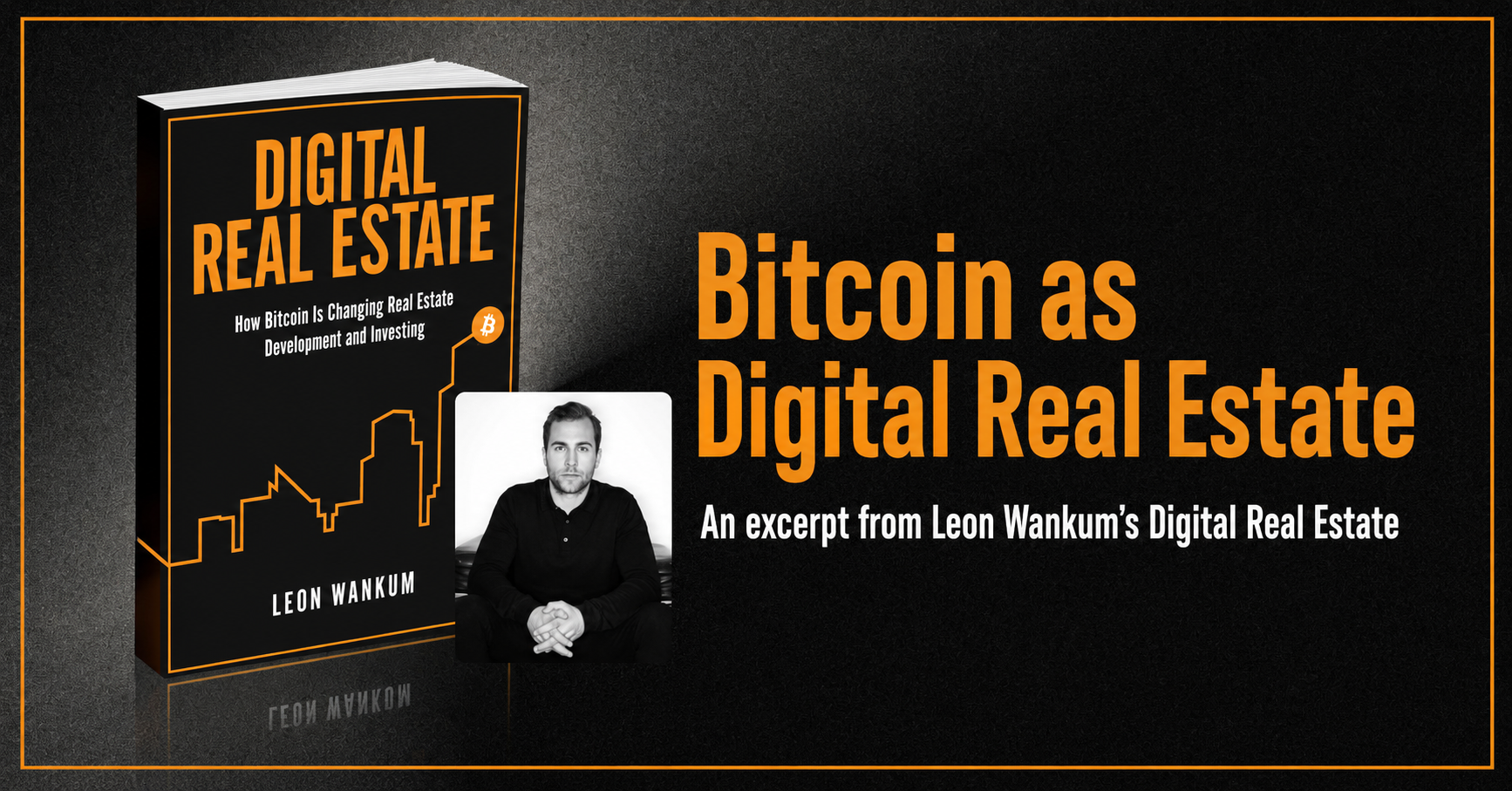
Leon Wankum, an author and researcher in the digital asset space, has published a significant new framework for understanding Bitcoin in his latest book, titled Digital Real Estate. The central thesis, highlighted in a recent excerpt featured on Bitcoin Magazine, argues that Bitcoin should not be viewed merely as a speculative currency or a technological novelty. Instead, Wankum posits that Bitcoin functions fundamentally as digital real estate. This conceptual shift moves the narrative away from short-term price volatility and toward long-term value storage. By defining Bitcoin through the lens of property rather than just money, Wankum provides investors and economists with a more stable mental model. This approach emphasizes permanence and ownership rights. It suggests that holding Bitcoin is akin to owning a prime piece of land in a growing digital city. The publication of this excerpt marks a moment where mainstream financial commentary begins to adopt more sophisticated analogies for cryptocurrency. It bridges the gap between traditional asset classes and emerging digital technologies.
The timing of this argument is critical as the broader financial world struggles to categorize digital assets. For years, regulators and investors have debated whether Bitcoin is a commodity, a currency, or a security. These labels often carry legal and tax implications that do not fit the technology. Wankum’s real estate analogy offers a third way. It draws on the intuitive understanding of land ownership that has existed for millennia. Just as physical land is finite and cannot be created out of thin air, Bitcoin has a hard cap on its supply. This absolute scarcity is the primary driver of the comparison. Unlike fiat currencies, which governments can print in unlimited quantities, Bitcoin’s protocol strictly limits the total number of coins to twenty-one million. This mathematical certainty creates a scarcity dynamic similar to that of prime real estate in major global cities. As the global population grows and wealth accumulates, the demand for scarce assets tends to rise. By framing Bitcoin as digital land, Wankum highlights its role as a store of value that is immune to inflationary policies. This context helps explain why institutional investors are increasingly treating it as a balance sheet asset rather than a trading vehicle.
Wankum supports this framework by pointing to three specific characteristics that align Bitcoin with high-value real estate. First is the absolute scarcity mentioned earlier, which ensures that supply cannot be manipulated by any central authority. Second is global portability. Physical real estate is immovable; you cannot easily move a building from New York to Tokyo. Bitcoin, however, can be transferred anywhere in the world instantly and with relative ease. This combines the scarcity of land with the liquidity of cash. Third is the growing economic network. Just as the value of real estate increases as the surrounding city develops, the value of Bitcoin rises as its network effect strengthens. More users, more developers, and more businesses accepting it create a robust ecosystem. This network effect drives demand and reinforces the asset's utility. Wankum argues that this combination creates a unique economic framework for storing and transferring value. It is not just about holding an asset; it is about participating in a growing digital economy. Critics may argue that real estate generates rental income, which Bitcoin does not, but Wankum counters that the appreciation potential and security of ownership are the primary parallels. The reaction from early readers suggests this model resonates with those looking for logical stability in a chaotic market.
This perspective matters because it changes how we assess risk and reward in digital assets. If Bitcoin is digital real estate, then the strategy for holding it shifts from active trading to long-term investment. Investors begin to focus on fundamentals like network security and adoption rates rather than daily price charts. This could lead to a more mature market with less volatility over time. As more people adopt this mental model, the narrative around Bitcoin may stabilize. It encourages a view of Bitcoin as a foundational layer of the global financial system. Future developments will likely see more financial products and regulatory frameworks align with this real estate analogy. This could unlock new avenues for institutional capital that was previously hesitant to enter the crypto space. Understanding Bitcoin as digital real estate provides a clearer path for integrating it into traditional wealth management strategies. It offers a language that old money can understand. As the digital economy expands, this framework may become the standard way to describe the role of scarce digital assets. The implications for global finance are profound, suggesting a future where digital land is as valuable as physical property.
Read Full Story at Bitcoin Magazine →


