Are there nuclear weapons hidden in space? Why a 60-year ban on space nukes has been impossible to enforce
When the United States and the Soviet Union signed the Outer Space Treaty in 1967, both nations agreed not to place nuclear weapons or other weapons of mass destruction in orbit around Earth. Specifi…
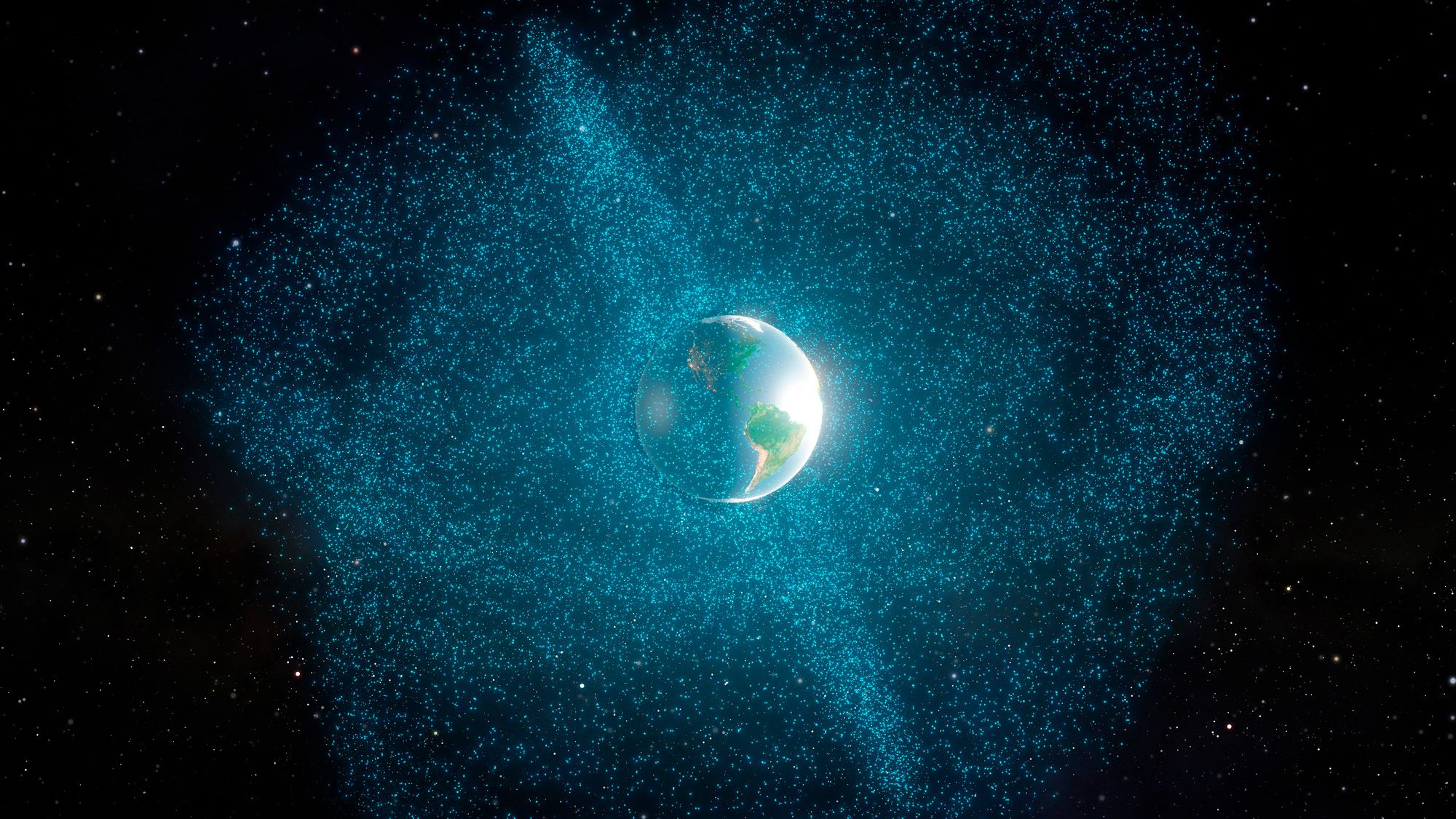
When the United States and the Soviet Union signed the Outer Space Treaty in 1967, both nations agreed not to place nuclear weapons or other weapons of mass destruction in orbit around Earth. Specifically, Article IV of the treaty was designed to keep the Cold War's nuclear arms race from extending into space — a goal both superpowers shared.
The problem, then and now, is that neither side has ever had a reliable way to confirm that the other is keeping its word.
After nearly 60 years of uncertainty, a recent feasibility study from MIT physicist Areg Danagoulian proposes a possible solution: a satellite-based sensor that could search for the signature of nuclear material aboard another spacecraft, using high-energy protons trapped by Earth's magnetic field as a probe. The telltale sign of a warhead in space would be a large burst of neutrons scientists expect to be produced when these highly energetic protons interact with radioactive elements, like uranium, inside a warhead. A detector roughly the size of an encyclopedia and equipped with specialized sensors could identify neutrons emanating from the direction of a possible warhead from about 2.5 miles (4 kilometers) away after roughly a week of observation, according to the study's calculations. At closer range, the detection could come much faster.
The consequences of a space-based nuclear detonation are dire. But whether a detection system will prevent nuclear detonation in space will depend on several factors, some of which are technical but many of which are not, experts told Live Science.
On Earth, nuclear weapon tests leave telltale signals — like seismic waves, radioactive debris, and intense bursts of light and heat — that scientists have spent decades learning to detect. However, a warhead could be hidden inside an ordinary-looking satellite, potentially for decades, with nothing on the outside to give it away. If such a weapon were to detonate, it could jeopardize thousands of commercial, scientific and military satellites in a single blast, littering orbit with dangerous debris.
For most of the Outer Space Treaty's history, the missing verification mechanism has been a theoretical gap rather than an urgent one — in part because the world had already seen what a nuclear detonation in orbit does, and largely avoided repeating it.
The clearest example is Starfish Prime, one of a dozen high-altitude nuclear tests the U.S. ran between 1958 and 1962. On July 9, 1962, the U.S. detonated a 1.45-megaton warhead roughly 250 miles (400 km) above the Pacific.
Get the world’s most fascinating discoveries delivered straight to your inbox.
Read Full Story at Live Science →