NASA highlights Saturn moon diversity with new Cassini image
NASA released a composite image of Saturn’s six moons from Cassini data to highlight their geological diversity. This comparison aids research into subsurface oceans and supports future missions expl…
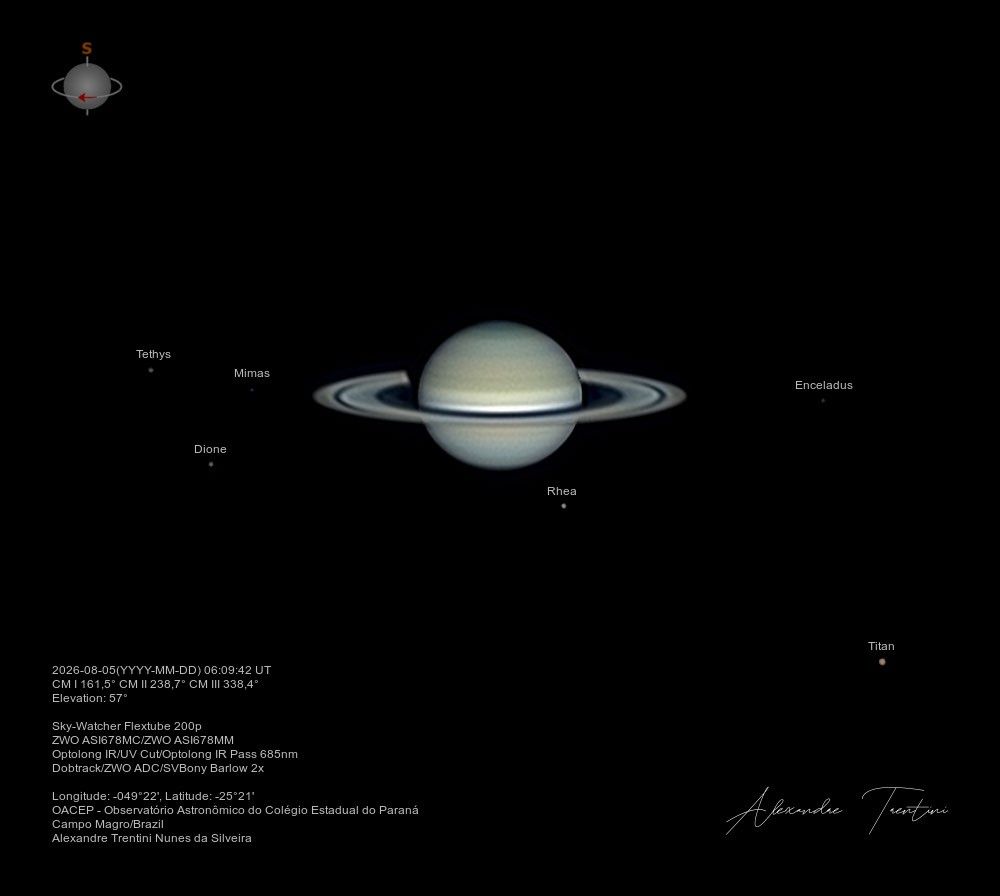
NASA’s Astronomy Picture of the Day on August 11, 2026 presents a striking composite of six of Saturn’s moons, captured by the Cassini spacecraft’s cameras before it plunged into the planet in 2017. The image arranges Mimas, Enceladus, Tethys, Dione, Rhea, and Titan side‑by‑side, giving viewers a sense of scale and colour that is impossible to see from Earth with a telescope. The bright, icy surfaces of the inner moons contrast sharply with the hazy, methane‑rich atmosphere of Titan, the largest moon in the solar system.
The composite was assembled from data released by NASA’s Planetary Data System, which continues to process and archive Cassini’s 13‑year archive. “We’re still discovering new details from Cassini’s footage,” said Dr. Maria Ortiz, a planetary scientist at the Jet Propulsion Laboratory. “This image lets people appreciate the diversity of Saturn’s satellites—from the crater‑covered Mimas to the geyser‑active Enceladus.” The image also highlights subtle differences in albedo and texture: Enceladus’s bright, clean ice patches hint at recent resurfacing, while Dione’s darker ridges suggest older, more weathered material. By placing the moons together, the APOD team shows how each body’s geology reflects its distance from Saturn and its interaction with the planet’s rings.
Looking ahead, the image underscores why scientists still study the Cassini data set. Understanding the moons’ surface composition helps assess their potential for harboring subsurface oceans, especially on Enceladus, where water vapor plumes have been detected. Future missions, such as the proposed Europa Clipper and the planned Titan Dragonfly rotorcraft, will build on Cassini’s legacy to probe the chemistry of these worlds more closely. The APOD release also reminds the public that planetary science is a long‑term endeavour; even after a spacecraft’s mission ends, its data can inspire new discoveries and keep the public engaged with the mysteries of the outer planets.
Read Full Story at NASA →