UK government weakens EV targets, costing consumers £3 billion annually by 2030.
The UK government is considering weakening its electric vehicle adoption targets, which could result in consumers facing up to £3 billion in additional costs annually by 2030. This potential shift ra…
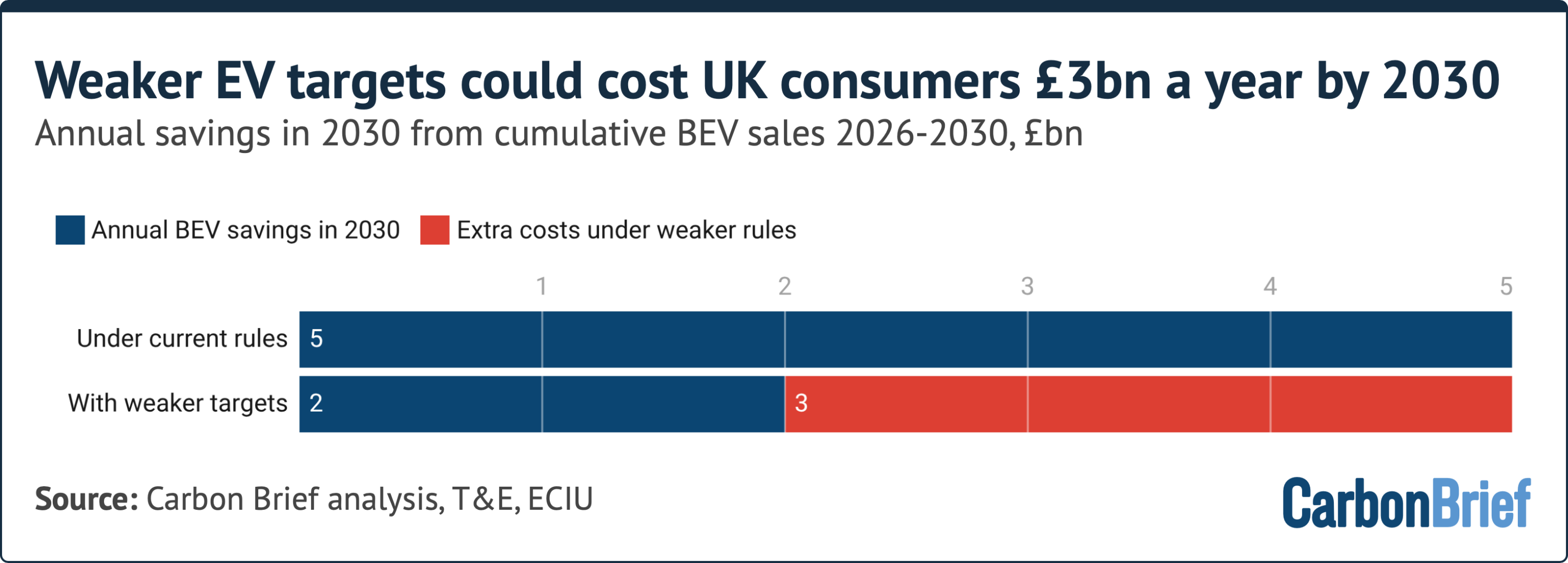
The UK government is preparing to consult on potentially weakening its targets for electric vehicle (EV) adoption, a move that could cost consumers up to £3 billion annually by 2030. Currently, the UK aims for all new cars and vans to be zero-emission by 2030, but changes to these targets are being considered amid concerns about the feasibility of meeting them.
This potential shift comes at a time when the UK is grappling with rising energy prices and inflation, which have put pressure on consumers and policymakers. The government has faced criticism over its approach to achieving climate goals while balancing economic challenges. Recent reports indicate that the UK is lagging behind other European nations in EV uptake, prompting some officials to argue that more gradual targets may be necessary to avoid overwhelming the market and the existing infrastructure.
If the targets are weakened, consumers could face higher long-term costs associated with vehicle ownership and fuel. A study from Carbon Brief highlights that delaying the transition to EVs could lead to increased reliance on fossil fuels, which would exacerbate climate change and public health problems. Furthermore, the potential reduction in EV sales could affect the automotive industry's role in driving innovation and job creation in the UK.
Looking ahead, the consultation will likely spark a debate over the balance between environmental commitments and economic realities. Stakeholders, including environmental groups and the automotive industry, will weigh in on the proposed changes. The outcome could significantly influence the UK's progress toward its climate goals and the overall cost of transport for consumers in the coming years.
Read Full Story at Carbon Brief →