Astronomers detect helium particles after black hole shreds massive star
Astronomers witnessed a black hole shredding a massive star in an event called “the Whippet,” releasing energy 400 billion times that of the Sun. Remarkably, researchers have detected fast-moving hel…
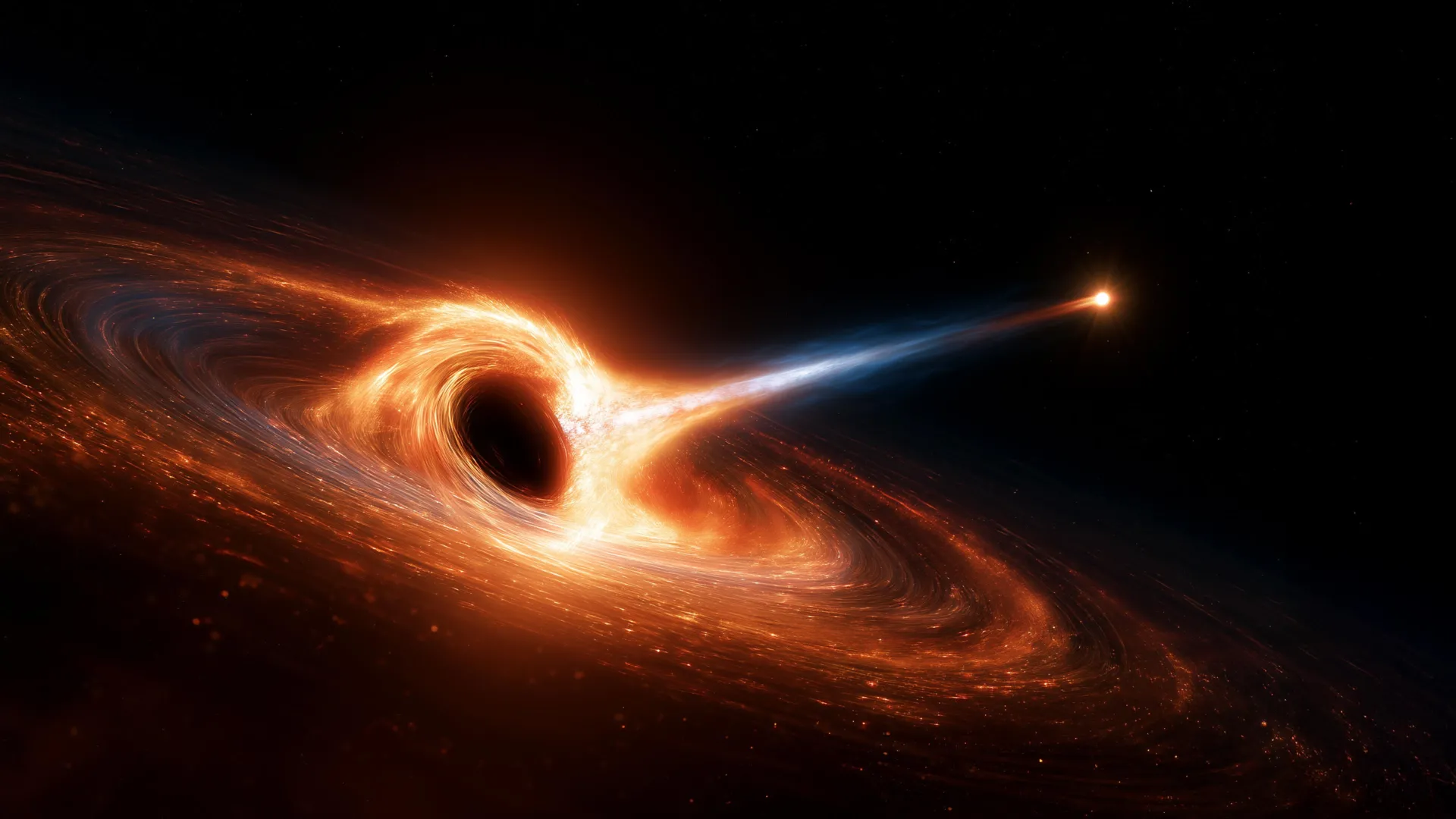
Astronomers have observed a black hole tearing apart a massive star in a cataclysmic event that has been dubbed “the Whippet.” This stellar explosion, one of the most powerful ever recorded, unleashed an astonishing amount of energy—about 400 billion times that of the Sun—while sending shock waves outward at one-fifth the speed of light.
The extraordinary event has captured the attention of scientists, as it provides insight into the violent interactions between black holes and massive stars. Such occurrences are rare, and the timing of this discovery coincides with ongoing advancements in astronomical observation tools, allowing researchers to study these phenomena in unprecedented detail. The Whippet offers a glimpse into the lifecycle of massive stars and the forces at play in their destruction.
In an intriguing twist, months after the explosion, researchers detected fast-moving helium particles in the aftermath of the event. This discovery raises questions about the possibility that some remnants of the original star may have survived the cataclysm. The presence of this helium, moving at unexpected speeds, could indicate that portions of the star's structure were not completely obliterated by the black hole's gravitational pull.
As scientists continue to analyze the data from the Whippet, this discovery could reshape our understanding of black holes and their interactions with massive stars. The findings could lead to new theories about stellar evolution and the fate of stars that come too close to these cosmic giants. The implications of this research may extend beyond the event itself, influencing how astronomers interpret similar phenomena in the universe.
Read Full Story at ScienceDaily →