NASA's Swift Observatory set to re-enter Earth imminently, debris possible
NASA's Swift Observatory, a 3,200-pound satellite that has studied cosmic explosions for over 20 years, is expected to re-enter Earth's atmosphere imminently after a failed attempt to boost its orbit…
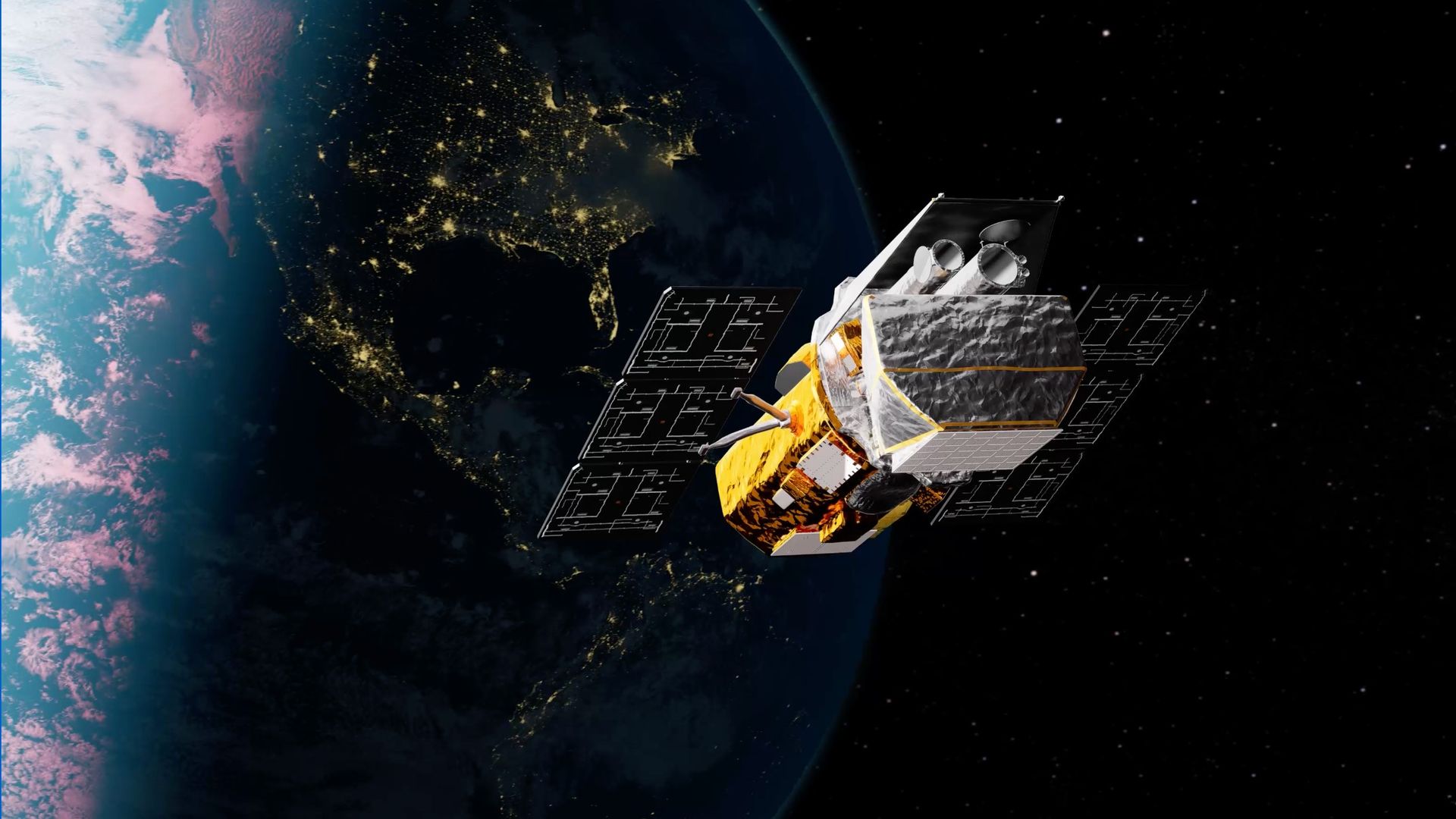
NASA’s Swift Observatory, a 3,200‑pound satellite that has spent more than two decades hunting cosmic explosions, is expected to plunge into Earth’s atmosphere within minutes after a private effort to lift it into a higher orbit failed. The spacecraft, launched in 2004, has been spiraling lower as its onboard fuel dwindles and atmospheric drag increases, and without a boost it will burn up over the Pacific Ocean later today.
Swift was built to detect gamma‑ray bursts, the most energetic explosions in the universe, and to relay their locations to ground‑based telescopes within seconds. Its rapid alerts have helped scientists study the deaths of massive stars, the collisions of neutron stars and the formation of black holes. Over the years the satellite’s orbit has gradually decayed; at its current altitude of roughly 250 km the thin atmosphere is enough to slow it down, and with no propulsion left the satellite cannot correct its trajectory. In early 2024 NASA contracted a commercial rideshare provider to attach a small propulsion module to Swift, hoping to raise the orbit and extend its service life. The launch vehicle suffered a second‑stage anomaly on the scheduled flight, and the module never reached Swift, leaving the observatory with no means to climb back up.
Most of Swift will vaporize during re‑entry, but fragments of its titanium and aluminum structure could survive and fall into the ocean. NASA’s 45th Space Wing is tracking the descent and has issued a brief public safety notice, though the probability of debris reaching populated areas is extremely low. Officials said the loss of Swift will be felt by the high‑energy astrophysics community, which will miss a reliable, all‑sky monitor for gamma‑ray bursts until a new mission is launched. The agency is already reviewing options for a next‑generation rapid‑response observatory to fill the gap.
NASA will conduct a post‑flight analysis to confirm where any debris lands and to refine future de‑orbit planning. The agency also plans to accelerate development of the upcoming “Burst Alert Telescope” concept, a smaller, more cost‑effective satellite that could restore continuous gamma‑ray monitoring within the next few years. Swift’s final blaze will close a historic chapter, but its data archive will continue to support research for decades to come.
Read Full Story at Live Science →